


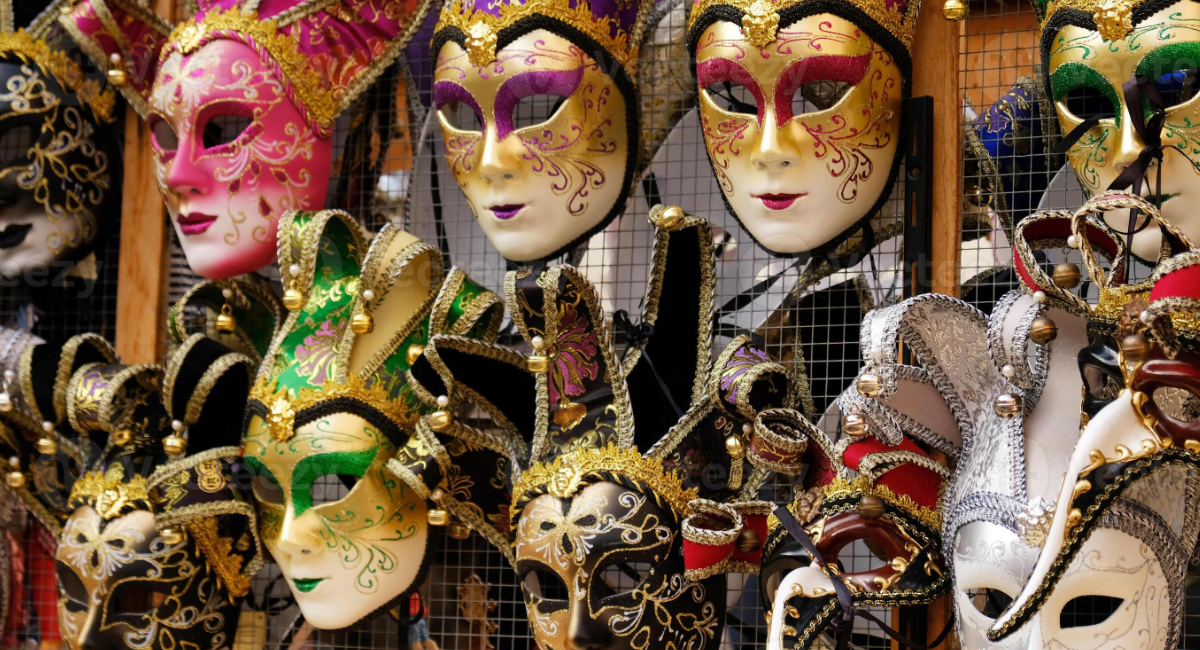
Venetian Masks — The Hidden Faces of Venice
Few symbols capture the mystery and allure of Venice as perfectly as the Venetian mask. Elegant, elaborate, and steeped in centuries of history, these masks are far more than simple souvenirs — they are a window into the soul of the city, reflecting its art, freedom, and intrigue.
Whether you visit Venice during the Carnival or wander through its artisan workshops any time of year, the tradition of mask-making offers a glimpse into one of the most fascinating aspects of Venetian culture.
The Origins of the Venetian Mask
The story of Venetian masks dates back to the 13th century, when Venetians began wearing them to conceal their identities during celebrations, political meetings, and even everyday life. In a city where social class and reputation were everything, anonymity offered something precious — freedom.
By the 17th and 18th centuries, masks had become a symbol of Venetian liberty. Nobles, merchants, and commoners mingled freely in the streets, protected by their disguises. Hidden behind a mask, Venetians could flirt, gamble, or engage in forbidden conversations without fear of judgment.
The Deep Connection Between Masks and the Carnival
The Venetian Carnival and its masks are inseparable — one simply cannot exist without the other. The mask became the very symbol of Carnival because it embodied the festival’s essence: freedom from identity and social rules.
During the height of the Republic, the Carnival season stretched for months, and wearing a mask allowed Venetians to blur the boundaries between nobility and commoners, men and women, locals and foreigners.
Hidden behind intricate designs and luxurious fabrics, everyone could reinvent themselves, indulging in joy, art, and desire without consequence. Even today, every February, when the city bursts into a spectacle of costumes and music, wearing a mask remains the most authentic way to step into Venice’s living history — to experience the city as its citizens once did centuries ago.
The Most Famous Types of Venetian Masks
Each mask has its own story and meaning. Some of the most iconic include:
-
Bauta — A white mask with sharp lines, often paired with a black cloak and tricorn hat. It allowed the wearer to eat and speak freely without revealing their face — the perfect disguise for political intrigue.
-
Colombina — A half-mask often decorated with gold, feathers, and jewels, said to have been created for an actress who wanted to show her beautiful face while remaining mysterious.
-
Volto (Larva) — The classic full-face mask, usually white, representing the anonymous Venetian citizen.
-
Medico della Peste (The Plague Doctor) — With its long beak and eerie appearance, this mask originated during the 17th-century plague. Doctors filled the beak with herbs to protect themselves from disease; today, it’s a striking reminder of Venice’s past.
-
Moretta — An oval black mask worn by Venetian ladies, held in place by biting a small button — a silent symbol of elegance and mystery.
The Art of Venetian Mask-Making
Authentic Venetian masks are still handmade today by skilled artisans known as mascareri. These craftsmen use traditional techniques with papier-mâché, fabric, and gold leaf, carefully decorating each piece by hand.
If you stroll through Venice, you can still find workshops around Castello, Dorsoduro, and San Polo, where artisans proudly carry on this centuries-old tradition. Visiting one of these ateliers offers a unique opportunity to see the artistry up close — and to bring home a real piece of Venetian history.
Discover Venice Beyond the Mask
At Vidal Venice Tours, we believe that to understand Venice, you must explore both its visible beauty and its hidden soul. Our boat tours take you beyond the crowded streets to discover the authentic life of the lagoon — where the stories behind the masks come alive in the calm waters and golden light of the city.
Related articles: