


Native Plants and Vegetation of the Venetian Lagoon: Discover the Hidden Green World of Venice
Beyond the famous landmarks lies one of the most fascinating and biodiverse ecosystems in Italy: the Venetian Lagoon. Covering more than 550 square kilometres, this unique environment is home to a remarkable variety of native plants and vegetation that have adapted to the ever-changing relationship between land and sea.
Exploring the natural side of the lagoon reveals a quieter, lesser-known Venice, one shaped not only by history but also by centuries of coexistence with nature.
Why the Vegetation of the Venetian Lagoon Is Unique
The Venetian Lagoon is a delicate ecosystem influenced by tides, brackish water, and varying salinity levels. These conditions create habitats that support specialized plant species capable of thriving where few others can survive.
Native vegetation plays a crucial role in:
- Preventing erosion.
- Stabilizing the lagoon’s mudflats and marshes.
- Providing food and shelter for birds and marine life.
- Maintaining the ecological balance of the lagoon.
Without these plants, Venice itself would be far more vulnerable to the forces of the sea.
The Barene: Venice’s Salt Marshes
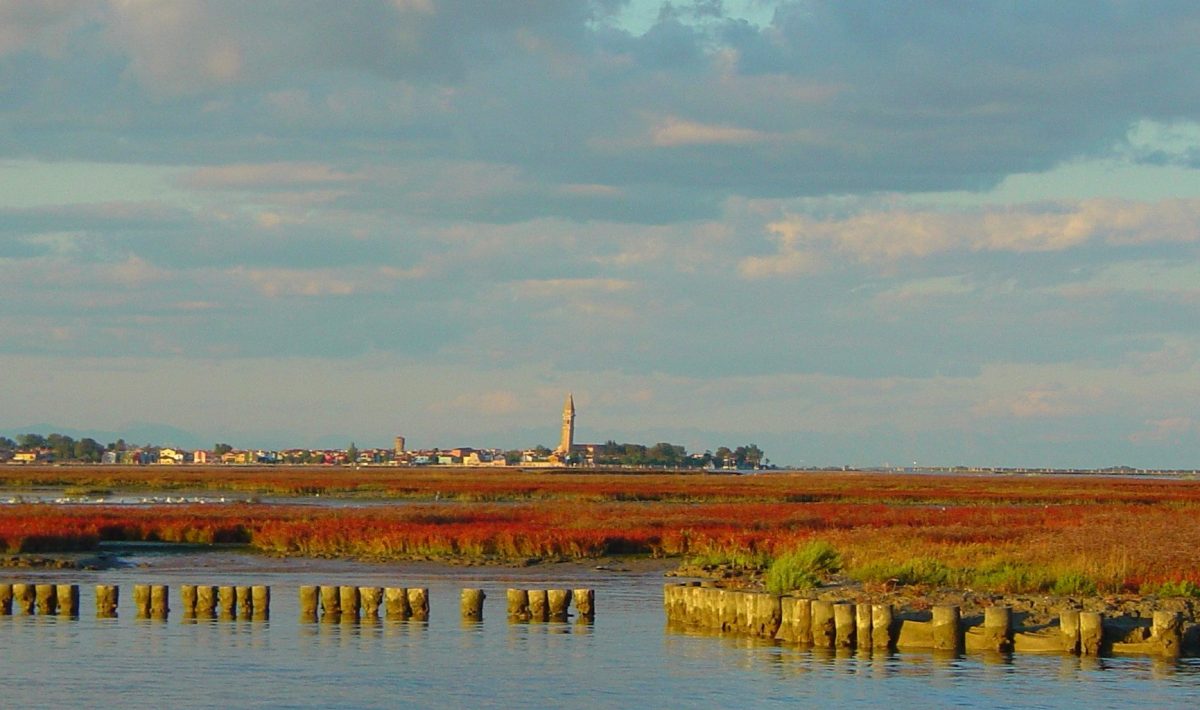
Among the most characteristic landscapes of the lagoon are the barene, shallow salt marshes that emerge above the water during low tide. These natural islands are essential to the health of the ecosystem and host numerous native plant species.
The vegetation found here has evolved to tolerate both saltwater and periodic flooding, making it highly specialized and incredibly resilient.
Today, the barene represent one of the most important natural habitats in northern Italy and are a paradise for birdwatchers and photographers.
Glasswort (Salicornia)
One of the most iconic plants of the Venetian Lagoon is glasswort, locally known as salicornia. This succulent plant thrives in salty environments and turns beautiful shades of red and purple during autumn.
Glasswort is not only important ecologically but has also traditionally been harvested as an edible plant. Today, it is considered a delicacy in Venetian cuisine and can occasionally be found in local restaurants.
Sea Lavender (Limonium narbonense)
Sea lavender adds vibrant purple colors to the marshes during the summer months. Despite its name, it is not related to common lavender but belongs to a different botanical family.
This hardy perennial plant withstands saline conditions and helps stabilize the muddy soil of the marshes. Its flowers also attract pollinating insects, contributing to the biodiversity of the lagoon.
Cordgrass (Spartina maritima)
Cordgrass is another key species found in the Venetian Lagoon. Its dense root systems trap sediments and help create and maintain the marshes themselves.
By slowing down water movement, cordgrass contributes to the formation of new land and protects the lagoon from erosion caused by waves and tides.
Sea Purslane (Halimione portulacoides)
Sea purslane forms low, silvery-green shrubs across the marshes. This salt-tolerant species plays an important role in nutrient cycling and offers shelter to many small animals and insects.
Its distinctive appearance gives the barene their characteristic texture and color throughout much of the year.
Reed Beds (Phragmites australis)
Along the edges of islands and freshwater areas, extensive reed beds create a different type of habitat. Common reeds are among the tallest plants in the lagoon and provide nesting sites for numerous bird species.
Historically, Venetians used reeds for roofing and various traditional crafts, demonstrating the close relationship between the local population and the lagoon’s natural resources.
Coastal Vegetation on the Barrier Islands
The islands of Lido, Pellestrina, and the sandbanks separating the lagoon from the Adriatic Sea host a variety of coastal plants adapted to sandy soils and sea winds.
Species such as:
- Marram grass (Ammophila arenaria)
- Sea holly (Eryngium maritimum)
- Sea rocket (Cakile maritima)
help stabilize the dunes and protect the coastline from erosion.
These plants are essential for preserving the fragile balance between the lagoon and the open sea.
A Sanctuary for Wildlife
The native vegetation of the Venetian Lagoon supports an extraordinary range of wildlife. Flamingos, herons, egrets, kingfishers, and countless migratory birds depend on these habitats for feeding and nesting.
Fish, crabs, mollusks, and insects also rely on the marsh plants, creating a complex web of life that has sustained the lagoon for centuries.
This remarkable biodiversity is one of the reasons why the Venetian Lagoon has been recognized as a UNESCO World Heritage Site.
Discover the Natural Venice with Vidal Venice Tours
While millions of visitors explore Venice’s monuments every year, relatively few experience the peaceful beauty of its natural landscapes.
At Vidal Venice Tours, we offer intimate boat experiences designed for small groups, allowing guests to discover the hidden corners of the Venetian Lagoon away from the crowds. Cruising through the marshes, secluded channels, and lesser-known islands offers a unique opportunity to appreciate the native vegetation and the extraordinary ecosystem that has protected Venice for over a thousand years.
Whether you’re passionate about wildlife, photography, or simply looking for an authentic experience, a private boat tour provides an unforgettable perspective on Venice that most visitors never see.
Don’t miss this adventure
The native plants and vegetation of the Venetian Lagoon are far more than just a beautiful backdrop. They are the living foundation upon which Venice itself depends.
From the colourful glasswort of the salt marshes to the reed beds and coastal dunes, these remarkable species have shaped the landscape for centuries. Exploring them reveals a side of Venice that is peaceful, wild, and deeply connected to nature.
For travellers seeking something beyond the usual tourist itinerary, discovering the green heart of the Venetian Lagoon may become one of the most memorable experiences of their journey.
Related articles: