


The Secret Gardens of Venice: Discover the City’s Hidden Oases
Many travellers don’t realize that behind high walls and modest doors, Venice hides a surprisingly green soul. Scattered across the city are secret gardens, private courtyards, and monastery cloisters—lush, silent spaces that reveal a more intimate and contemplative side of Venice.
These hidden gardens are not always marked on maps, but they are an essential part of Venetian history and daily life. Exploring them means discovering a Venice that exists beyond crowds and main routes.
A Green City Built on Water
Venice was never meant to be a city of grand public parks. Space was precious, and every square meter had to be carefully planned. Instead of open green areas, Venetians created private gardens inside palazzos, religious complexes, and monasteries, protected from salt winds and rising tides by high walls.
For centuries, these gardens served practical purposes—growing herbs, vegetables, and fruit—but they also offered peace, shade, and beauty in a dense urban environment. Today, they remain one of the city’s most fascinating hidden features.
The Secret Garden Behind the Redentore Church
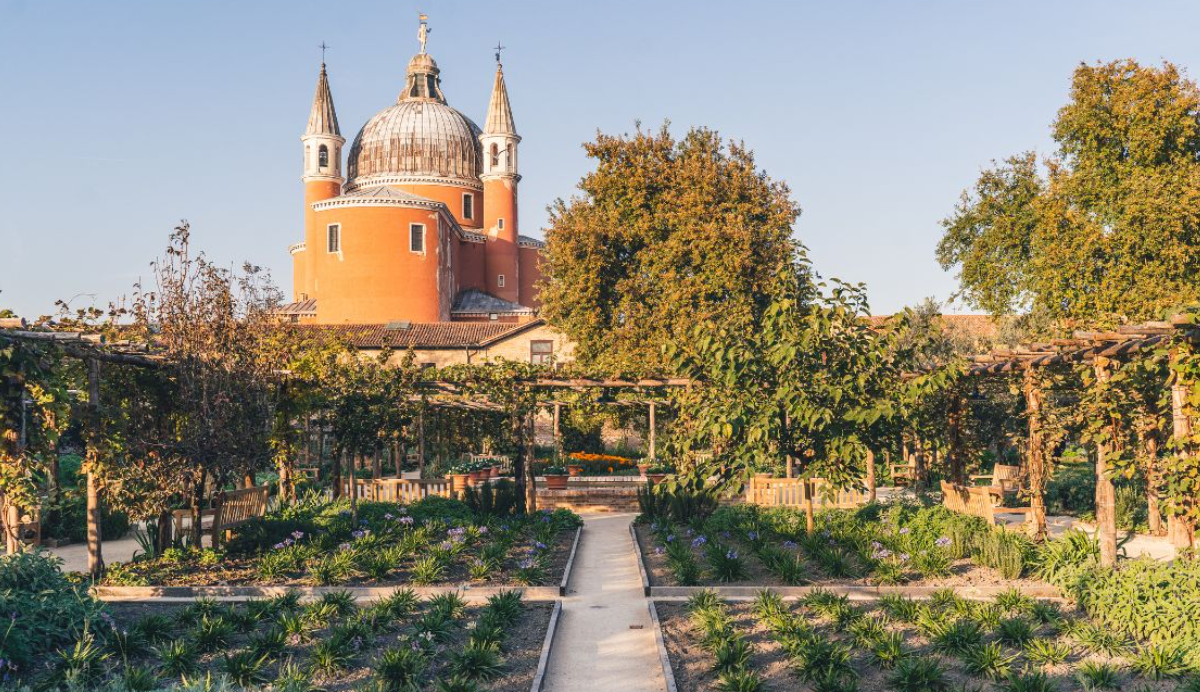
One of the most enchanting hidden gardens in Venice lies behind the Church of the Redentore, on Giudecca Island. Designed by Andrea Palladio in the 16th century, the church is well known, but few visitors are aware of the tranquil green space hidden behind it.
This garden, once used by the Capuchin friars, reflects a monastic approach to nature: simple, orderly, and deeply connected to contemplation. Fruit trees, aromatic plants, and shaded paths create a serene atmosphere, far removed from the busy historic center across the canal.
Giudecca itself feels more residential and authentic, making this area perfect for travellers seeking a slower, more local Venice.
Cannaregio’s Hidden Courtyards and Gardens
The Cannaregio district is one of the best areas in Venice to catch glimpses of secret gardens and quiet internal courtyards. Long considered a working-class and residential neighbourhood, Cannaregio developed with a strong sense of privacy, resulting in green spaces carefully hidden behind walls and gates.
While many gardens remain private, attentive visitors can still discover several authentic examples:
-
The Jewish Ghetto courtyards (Ghetto Nuovo and Ghetto Ghetto Vecchio) feature small communal green areas and trees, visible and accessible as part of the public squares. Though modest, they offer a rare sense of openness and calm in the historic center.
-
The cloister of Santa Maria Assunta (I Gesuiti), near Fondamente Nove, includes a peaceful internal courtyard that can be glimpsed during church visits. Its greenery reflects the Jesuit tradition of contemplation and study.
-
San Giobbe’s cloister, part of Ca’ Foscari University’s economics campus, preserves the atmosphere of a former Franciscan monastery. While access is limited, the courtyard is sometimes visible and gives a clear idea of how monastic gardens once structured daily life.
-
Along smaller canals and fondamenta, iron gates occasionally reveal private palazzo gardens with citrus trees, climbing vines, and shaded paths—especially around Madonna dell’Orto and the northern edges of the district.
Walking through Cannaregio in the early morning or late afternoon, when locals reclaim their neighbourhood, reveals a Venice that feels deeply lived-in. Here, greenery softens brick façades and stone walls, adding a rare sense of stillness and authenticity.
Monasteries, Cloisters, and Lost Gardens
Many of Venice’s secret gardens are closely tied to the city’s long religious history. For centuries, monasteries and convent occupied vast portions of the lagoon city, each organized around an enclosed garden or cloister.
These spaces functioned as self-contained ecosystems, where monks and nuns cultivated vegetables, medicinal herbs, fruit trees, and flowers, while also providing silence and spiritual refuge. Their design followed strict symbolic and practical principles, balancing nature, faith, and daily survival.
Some religious gardens that visitors can still experience today include:
-
The garden of San Francesco della Vigna (Castello district), a beautifully preserved Franciscan space that reflects centuries-old agricultural traditions.
-
The cloister of San Giorgio Maggiore, accessible to visitors and offering a rare combination of formal geometry and lagoon views.
-
Smaller convent courtyards throughout Venice, occasionally opened during cultural events or special garden days, revealing layers of hidden green history.
Although many monastic gardens are no longer accessible, their presence is still felt in the city’s urban fabric: irregular building layouts, unexpected open spaces, and patches of greenery rising above ancient walls. Some gardens have been transformed, others absorbed into private residences, but all contribute to Venice’s subtle and often overlooked green heritage.
Why Venice’s Secret Gardens Matter
These gardens are more than beautiful spaces—they are a reminder of Venice’s delicate balance between nature, architecture, and human life. In a city built on water, greenery has always been carefully protected and deeply valued.
For travellers, discovering these hidden gardens means:
-
Experiencing a quieter, more authentic Venice
-
Understanding how Venetians adapted to limited space
-
Seeing the city beyond its famous landmarks
They also highlight a side of Venice that many visitors miss: a city designed not only for trade and power, but also for reflection and harmony.
How to Discover Venice’s Hidden Gardens
While most secret gardens are private, you can still enjoy their presence by:
-
Exploring less touristy districts like Cannaregio and Giudecca
-
Joining special guided tours focused on hidden Venice
-
Visiting during events like Venice’s Garden Days, when some private gardens open to the public
Even a simple walk, paying attention to doors, walls, and quiet passages, can reveal glimpses of green that transform your perception of the city.
A Different Way to Experience Venice
Venice’s secret gardens invite travellers to slow down, look closer, and appreciate what lies behind the surface. They remind us that Venice is not just a postcard city, but a living place where nature and architecture coexist in subtle ways.
If you’d like to experience this hidden side of Venice in a truly special way, exploring the city from the water offers a unique perspective. With Vidal Venice Tours, our boat tours through the Venetian Lagoon glide past quiet canals, monasteries, and garden walls that are invisible from the main routes, revealing a softer and more authentic Venice. Moving slowly across the lagoon, far from the crowds, you’ll discover how nature, silence, and history still shape everyday life in the city — just as they have for centuries.
Related articles: