


Is Venice Really Sinking? A Guide for Visitors
Venice is one of the most extraordinary cities in the world—an elegant maze of canals, bridges, and palaces rising from the water. But behind its beauty lies a question many travellers ask: Is Venice sinking?
The short answer is yes—but the full story is far more fascinating, complex, and hopeful.
In this guide, we explore why Venice is sinking, what’s being done to protect it, and what visitors should know when exploring this fragile, magical city.
Why Venice Is Sinking: The Real Reasons
Venice’s slow subsidence has been happening for centuries, but several modern factors have accelerated the process. Understanding them helps travellers appreciate the delicate balance that shapes life in the lagoon.
1. Natural Subsidence
Venice was built on ancient wooden piles driven deep into soft lagoon mud. Over time, the natural compression of the sediment causes the city to sink a few millimetres per year.
2. Sea-Level Rise
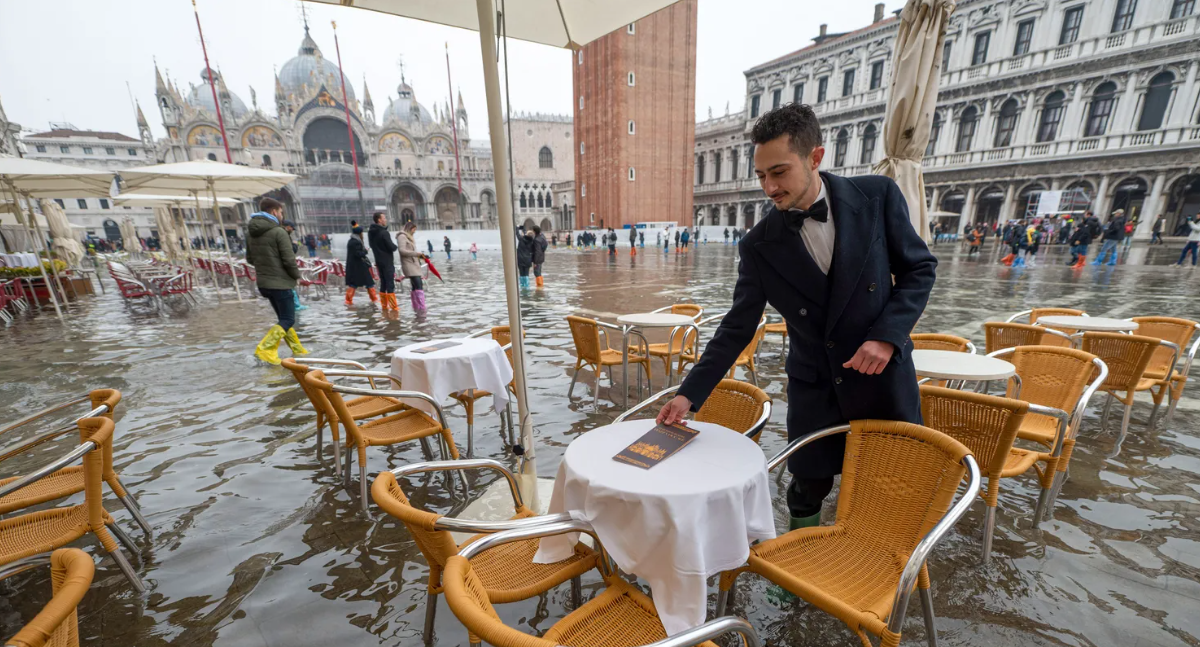
Climate change has become one of the biggest threats to Venice. Rising sea levels in the Adriatic make acqua alta (high tide flooding) more frequent and more intense.
3. Human Impact
In the 20th century, groundwater pumping caused Venice to sink faster. Although the practice has been stopped, its effects are still felt.
Additionally, large ships and industrial activities created strong waves that eroded the lagoon’s delicate equilibrium.
How Much Has Venice Sunk?
Over the last century, Venice has sunk roughly 25 centimetres, a combination of ground subsidence and rising sea levels.
For travellers, this is most noticeable during autumn and winter, when acqua alta can temporarily flood areas like Piazza San Marco.
What Is Being Done to Save Venice?
Despite the challenges, Venice is not doomed. Enormous engineering projects and environmental policies aim to preserve the city for future generations.
1. The MOSE Project
MOSE is Venice’s massive system of movable barriers installed at the three lagoon inlets—Lido, Malamocco, and Chioggia.
During exceptionally high tides, the barriers rise to protect the city from flooding.
Since becoming operational, MOSE has prevented dozens of major floods, drastically reducing the impact of storm surges.
2. Lagoon Restoration
Restoring salt marshes (“barene”) and reinforcing natural barriers helps stabilize the lagoon ecosystem and soften incoming waves.
3. Controlled Navigation
Restrictions on large ships and certain industrial activities aim to protect the lagoon’s fragile balance.
Is Venice Safe to Visit? Absolutely.
Many travellers worry about Venice’s sinking, but the city remains safe to explore. Thanks to MOSE and continuous conservation work, floods are far less common than they were just a few years ago.
If acqua alta occurs, it usually lasts 1–3 hours and affects mostly low-lying areas. Raised walkways and real-time tide forecasts make it easy for visitors to plan their day.
How Travelers Can Experience Venice Responsibly
As Venice faces environmental challenges, visitors play an important role in respecting the city.
✔ Choose eco-friendly transportation
Walking and vaporetto boats minimize environmental impact.
✔ Visit beyond the main tourist hotspots
Exploring lesser-known islands—like Sant’Erasmo, Pellestrina, or Certosa—helps spread tourism and reduces pressure on Venice’s historic center.
✔ Support local businesses
Family-run restaurants, artisans, and boat tour operators (like Vidal Venice Tours) help keep Venice’s cultural heritage alive.
The Future of Venice
Venice has been fighting the sea for over 1,600 years—and it continues to adapt. Whether through innovative engineering like MOSE, environmental restoration, or responsible tourism, the city is determined to remain one of the world’s most enchanting destinations.
For travellers, understanding Venice’s fragile relationship with the water only deepens the wonder of visiting it. Here, every canal, every reflection, and every foggy morning tells the story of a city suspended between land and sea—a place unlike anywhere else on Earth.
Related articles: